


Laser Cladding Repair Processing for Printing Rollers
Contact Info
- Add:西安市国家民用航天产业基地航天基地299号西安建工科技创业基地十号楼4层, Zip:
- Contact: 段纯
- Tel:17392761868
- Email:gsjgkj@163.com
Other Products


In the printing industry, rollers, as core components, are subjected to long-term challenges such as extrusion, friction, and ink corrosion, making them highly susceptible to issues like wear, scratches, and rust, which directly affect print quality and production efficiency. The emergence of laser cladding repair technology provides an efficient and high-quality solution for the recycling and reuse of printing rollers.
Laser cladding repair processing is a surface modification technology based on high-energy laser beams. Its principle involves using a high-energy laser beam to rapidly melt alloy powder and the damaged area on the roller surface, forming a high-performance cladding layer that metallurgically bonds with the base material. This bonding method differs from traditional electroplating or spraying, offering high bonding strength and resistance to detachment, effectively restoring the roller's dimensional accuracy and surface performance.
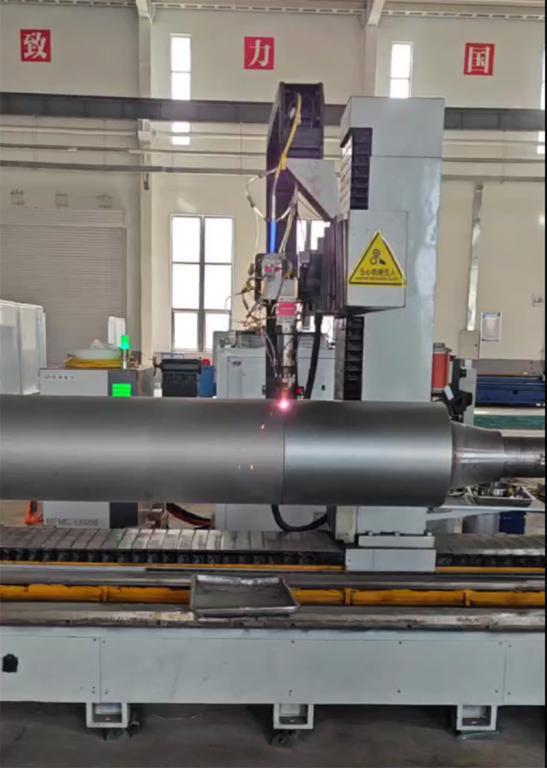
This technology demonstrates numerous significant advantages in printing roller repair. In terms of material adaptability, alloy powders with different compositions, such as nickel-based, cobalt-based, and iron-based, can be selected based on the roller's working environment and performance requirements. This enables the repaired roller surface to exhibit properties like wear resistance, corrosion resistance, and high-temperature resistance, meeting the needs of various printing processes. For example, for cast iron rollers commonly used in paper printing, laser cladding with nickel-based alloy powder can significantly enhance surface hardness and wear resistance, extending their service life.
In terms of repair precision, laser cladding offers extremely high controllability. The laser beam has high and concentrated energy density with a small heat-affected zone, allowing precise control over the thickness and shape of the cladding layer. The minimum cladding thickness can reach 0.1 mm, and the dimensional accuracy of the repaired roller can be within 0.01 mm, effectively ensuring key parameters such as roundness and cylindricity. This ensures smooth operation during the printing process, avoiding issues like misregistration and uneven ink distribution caused by insufficient roller precision.
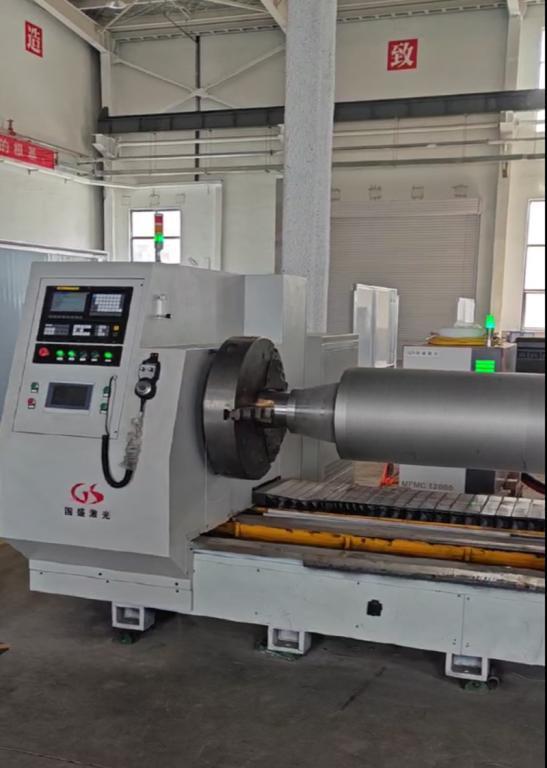
From an economic perspective, laser cladding repair significantly reduces costs compared to replacing new rollers. Generally, the repair cost is only 30% - 50% of that of a new roller, while also minimizing downtime caused by roller replacement and improving production efficiency. For example, in a large printing production line, replacing a chrome-plated roller with a diameter of 500 mm and a length of 3000 mm can cost tens of thousands of yuan. In contrast, laser cladding repair not only substantially lowers costs but also allows for quick completion and reuse, reducing unnecessary losses for enterprises.
The operational process of laser cladding repair for printing rollers is rigorous and standardized. First, a comprehensive inspection of the roller is required, including visual checks, dimensional measurements, and hardness tests, to identify the location and extent of damage and develop a detailed repair plan. Next, the damaged area undergoes pretreatment to remove surface oil, rust, and fatigue layers, typically through mechanical grinding or sandblasting, ensuring the surface is clean and rough to enhance the bonding strength between the cladding layer and the base material.
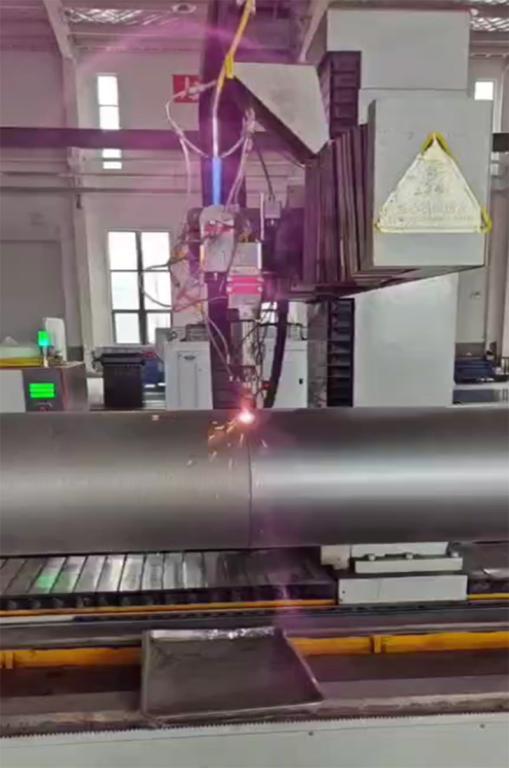
The next step is the laser cladding process, where the selected alloy powder is uniformly fed into the laser action zone via a powder feeding device. Simultaneously, the laser beam irradiates the damaged area, melting both the powder and the base material surface, which rapidly solidifies under inert gas protection to form the cladding layer. During cladding, parameters such as laser power, scanning speed, and powder feed rate must be precisely controlled to ensure the quality of the cladding layer. After cladding, the roller undergoes subsequent processing, such as grinding and polishing, to achieve the required surface roughness and dimensional accuracy. Finally, strict quality inspections are conducted to ensure the repaired roller meets production standards.
Laser cladding repair technology is not only applicable to printing rollers made of various materials, such as cast iron, steel, and stainless steel, but also capable of repairing different types of rollers, including plate rollers, blanket rollers, and impression rollers. Whether dealing with minor scratches and wear or more severe localized damage, this technology can effectively restore them.
In summary, laser cladding repair technology for printing rollers, with its advantages of high quality, precision, and cost-effectiveness, plays an increasingly important role in roller maintenance within the printing industry. It not only extends the service life of rollers and reduces production costs for enterprises but also enhances print quality and production efficiency, providing strong support for the sustainable development of the printing industry.
| Industry Category | Others |
|---|---|
| Product Category | |
| Brand: | 国盛激光 |
| Spec: | |
| Manufacturer: | 国盛激光 |
| Origin: | 116101 |


